Earlier this year, the Pegasus issue made quite the headlines when an international media reported that over 300 verified Indian mobile phone numbers were on the list of potential targets, that included politicians and persons of eminence like journalists and activists, for surveillance using the Israeli spyware.
The petition for the probe was started in September, in the earlier hearing when the Supreme Court had agreed to the Centre’s request to adjourn the hearing for an independent probe into allegations of the government using the spyware to snoop on citizens.
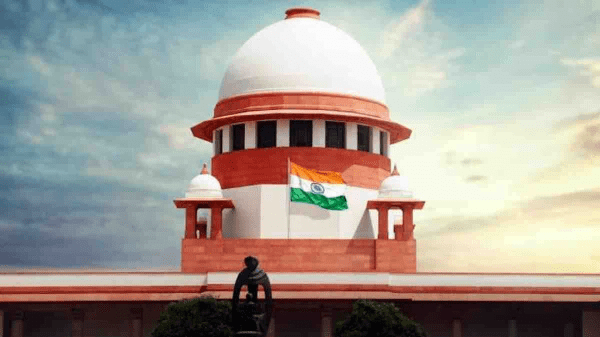
But the latest development comes on Wednesday when the Supreme Court ordered setting up of an expert committee, ruling on a batch of 12 petitions which sought an independent probe into the issue.
A three-member panel of experts has been appointed, saying that every citizen needs protection against violation of privacy. The bench comprising of Chief Justice of India N V Ramana, Justices Surya Kant and Hima Kohli named a three-member technical committee comprising Dr Naveen Kumar Chaudhary, Dean of National Forensic Sciences University in Gandhinagar; Dr Prabaharan P, Professor at Amrita Vishwa Vidyapeetham in Kerala; and Dr Ashwin Anil Gumaste, Institute Chair Associate Professor at Indian Institute of Technology, Bombay.
The committee’s functioning will be overseen by Justice Raveendran who will be assisted by former IPS officer Alok Joshi and cyber security expert Dr Sundeep Oberoi.
During the earlier hearings, the Centre had filed a brief affidavit denying the allegations against it and said the matter involved national security questions, due to which it did not wish to put the details out in a public.
Though, it agreed to divulge the details to a committee of experts who would examine the issue and urged the court to allow it to set up the committee.
In the latest decision, the Supreme Court stated that the State cannot get “a free pass every time the spectre of national security is raised” and the committee has been asked to conduct the inquiry and submit its report to the Supreme Court “expeditiously”.
The matter will be heard again after eight weeks. The Court also drew out the chilling effect of surveillance both for citizens and journalists and affirmed that the fundamental right to privacy flows from “the inalienable human dignity and autonomy that enables us to exercise our choices, liberties and freedoms.”